
University students, academics, lawyers, and legal scholars at the national and international levels may participate in the lecture series.
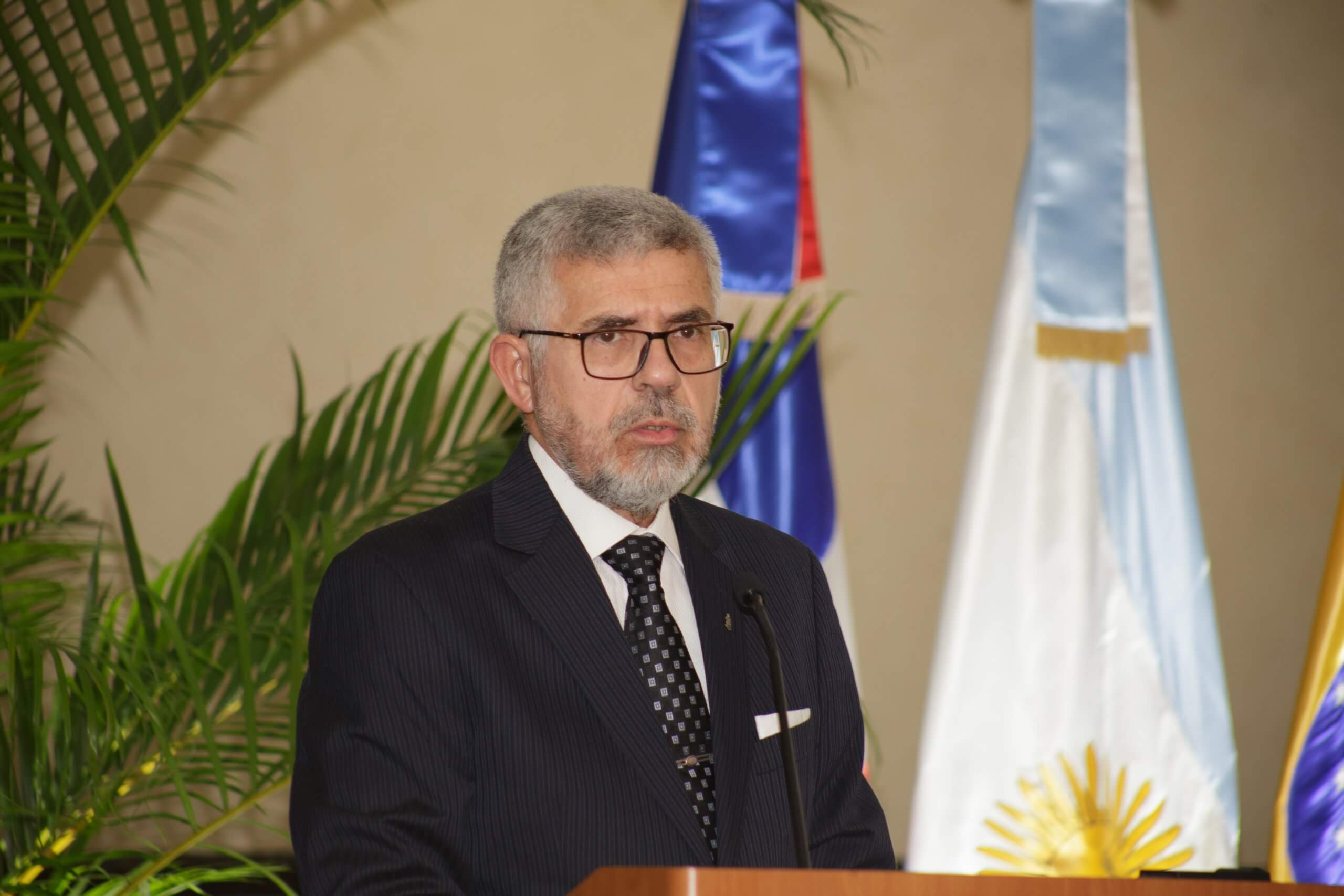
The Judiciary and the National School of the Judiciary (ENJ) launched Manuel Ramón Ruiz Tejada Chair of Judicial Ethics“ which will be led by Magistrate Justiniano Montero Montero, judge of the First Chamber of the Supreme Court of Justice and national commissioner before the Ibero-American Commission of Judicial Ethics (CIEJ), and Armando Andruet, ENJ professor and international director of the Chair.
The announcement was made during the celebration of the CIEJ Dialogues, held from the 6th to the 8th of this month of September, with the presence of commissioners from Cuba, Costa Rica, Colombia, and the Dominican Republic.
Armando Andruet, who chairs the National Academy of Law and Social Sciences of Córdoba (Argentina) and chaired the TSuperior Court of Justice of Córdoba, he explained that the Judicial Branch faces major challenges with the new lecture series that will be taught through the ENJ, among them making known the background and ethical contributions of Dr. Ruiz Tejada.
He also highlighted the proposals to be developed within the professorship for the remainder of 2022 and the upcoming year 2023, among these: perspectives for projects related to research, training, and the execution of work projects.
The study methodology includes approaches to legal and academic institutions at the national and international levels to involve them in the analysis and drafting of texts on the subject of judicial ethics. Likewise, it involves developing a practice of sharing the results with national universities, study centers, and the schools that are members of the Ibero-American Network of Judicial Schools.
“A chair of judicial ethics cannot function if it is encapsulated within the cloister of the National School of the Judiciary or the Judiciary, hence the invitation to the university, academic, professional environments that we can work together, first because the undergraduate and graduate spheres in university education still leave much to be desired regarding the issues of ethics, judicial ethics, and the professional ethics of the legal profession, and for that, from the Chair we will put forth our responsibility and commitment,” Andruet stated.
Armando Andruet worked on the drafting and modification of the Code of Ethical Conduct of the Dominican Judiciary, which focuses on 3 fundamental elements: quality, accessibility, and transparency, the latter related to the duty of male and female judges to be accountable.
About Manuel Ramón Ruiz Tejada
Manuel Ramón Ruiz Tejada was president of the Supreme Court of Justice during the 1966-1974 period, a lawyer, and a statesman. He was born in La Vega on September 8, 1907.
In 1974, upon resigning from the presidency of the Supreme Court of Justice, he dedicated himself to the professional practice of law, standing out for his strong ethical and moral principles.
 Español
  English
  Français
  Italiano
  Deutsch
  Português do Brasil
  Polski
  Русский