
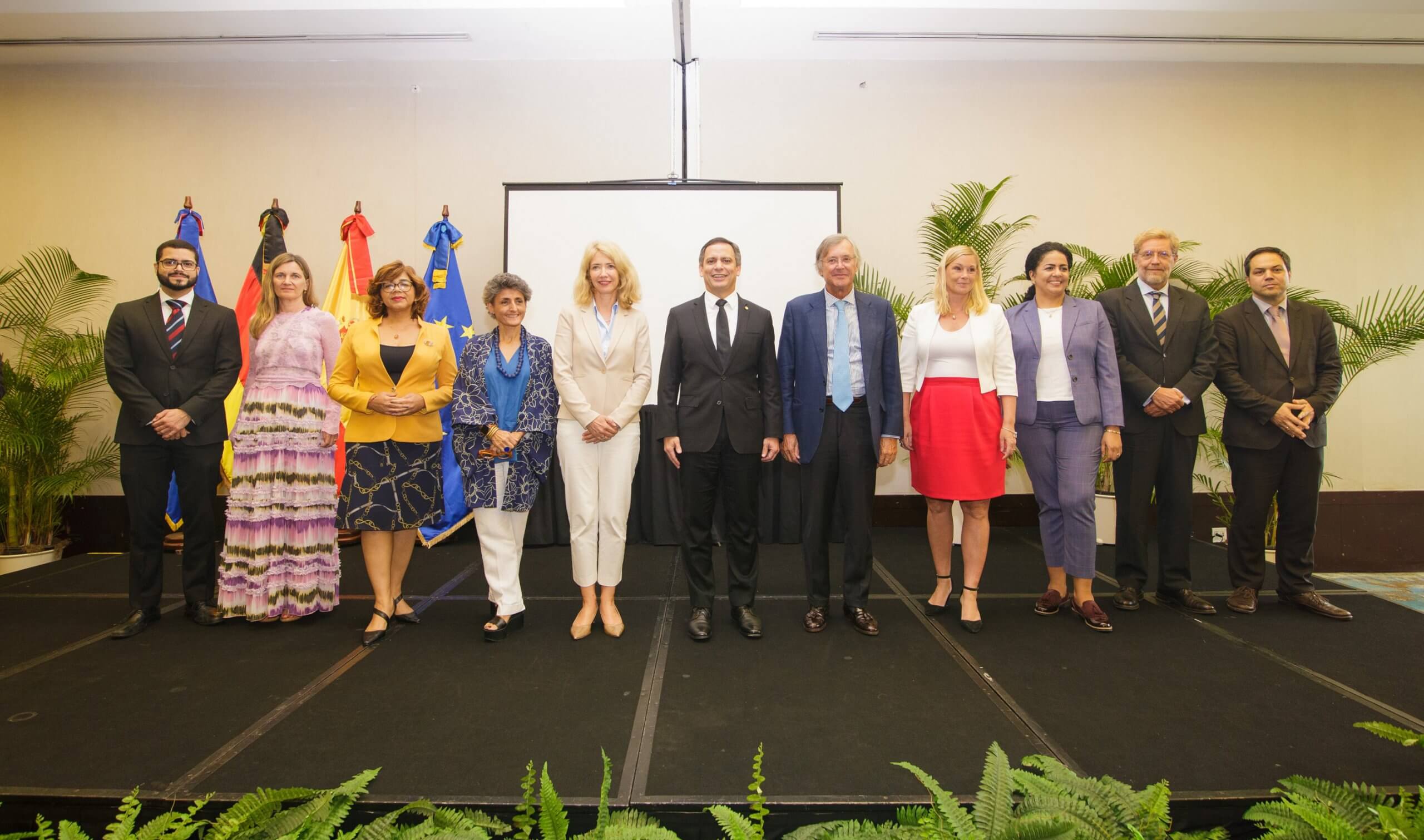
Experts from various disciplines in Spain and Germany will provide guidance and share best practices to strengthen the justice system
The European Union and the Dominican judiciary held the launch of the twinning project this afternoon (Twinning) designed to support the implementation of the Dominican Republic’s Judicial Branch Strategic Plan, “Vision Justice 20/24.”.
The launch event was presided over by Judge Luis Henry Molina Peña and the European Union ambassador, Katja Afheldt as well as by the Spanish ambassador, Antonio Pérez Hernández y Torra, and Katrin Werdermann, representing the German embassy.
With a budget of 54 million Dominican pesos, the experts funded by these European funds will support the judiciary for 24 months.
During the event, the European Union ambassador stated that “this country has embarked on a fight against impunity and the promotion of transparency at all levels. ”In June of this year, we awarded the European Human Rights Prize to the Attorney General of the Republic for her commitment to the fight against corruption and impunity.”.
“With the Twinning program we are launching today, we want to help ensure that the Dominican Republic’s judicial system meets the expectations of its citizens. Judges play such an important role in this transformation: ensuring that “no one is above the law” when administering justice, and thus contributing to the fight against impunity and guaranteeing the proper functioning of the rule of law,” said the ambassador. Afheldt.
For his part, Judge Molina Peña said that “the project we are presenting today is bearing fruit in the ”establishing an institutional and workforce framework in line with the new management culture and its resulting impacts on a modern justice system that channels efforts toward improving performance, thereby achieving an efficient, inclusive, and trustworthy justice system.".
The president of the SCJ emphasized that the Twinning project, which is being launched in the Dominican Republic, aims to standardize processes and procedures to improve service to users. “We must address the judicial backlog using best-practice standards that will lead to higher levels of trust and satisfaction with judicial services and reinforce integrity and transparency.”.
The Project Twinning Its main objective is to share experiences and support initiatives that promote public trust and satisfaction with the judicial services provided by the Dominican Judiciary nationwide. It will focus on three components: establishing a comprehensive, quality-based management model; improving quality and satisfaction in the service to users and the strengthening of judicial integrity.
This is the first time this type of support has been provided outside the European Union, with the Dominican Republic being the first country to benefit from this initiative, which facilitates the exchange of experiences and best practices among partner countries with the aim of improving the quality of public services.
On this occasion, the support is being provided by experts from the public administrations of Spain and Germany, who will work alongside members of the judiciary over a 24-month period.
This cooperation initiative is being coordinated by the International Ibero-American Foundation for Public Administration and Public Policy (FIIAPP) and Germany’s Federal Ministry for Economic Affairs and Climate Action (GIZ). To achieve its objectives, the project is supported by Judge Luis de Arcos Pérez, the project leader from Spain, and Judge Octavia Fernández Curi, a member of the Judicial Council and Project Leader on the Dominican side, as well as Spanish and Dominican experts with extensive experience and knowledge in the administration of justice.
Judges from the Supreme Court of Justice participated in the meeting, from the Dominican Judicial Council and the General Council of the Judiciary of Spain; as well as judges from various jurisdictions. Also in attendance were project leaders, attachés from the various embassies, delegates, and officials from the countries participating in the twinning project.
 Español
 English
 Français
 Italiano
 Deutsch
 Português do Brasil
 Polski
 Русский